When an articulating boom fits the job
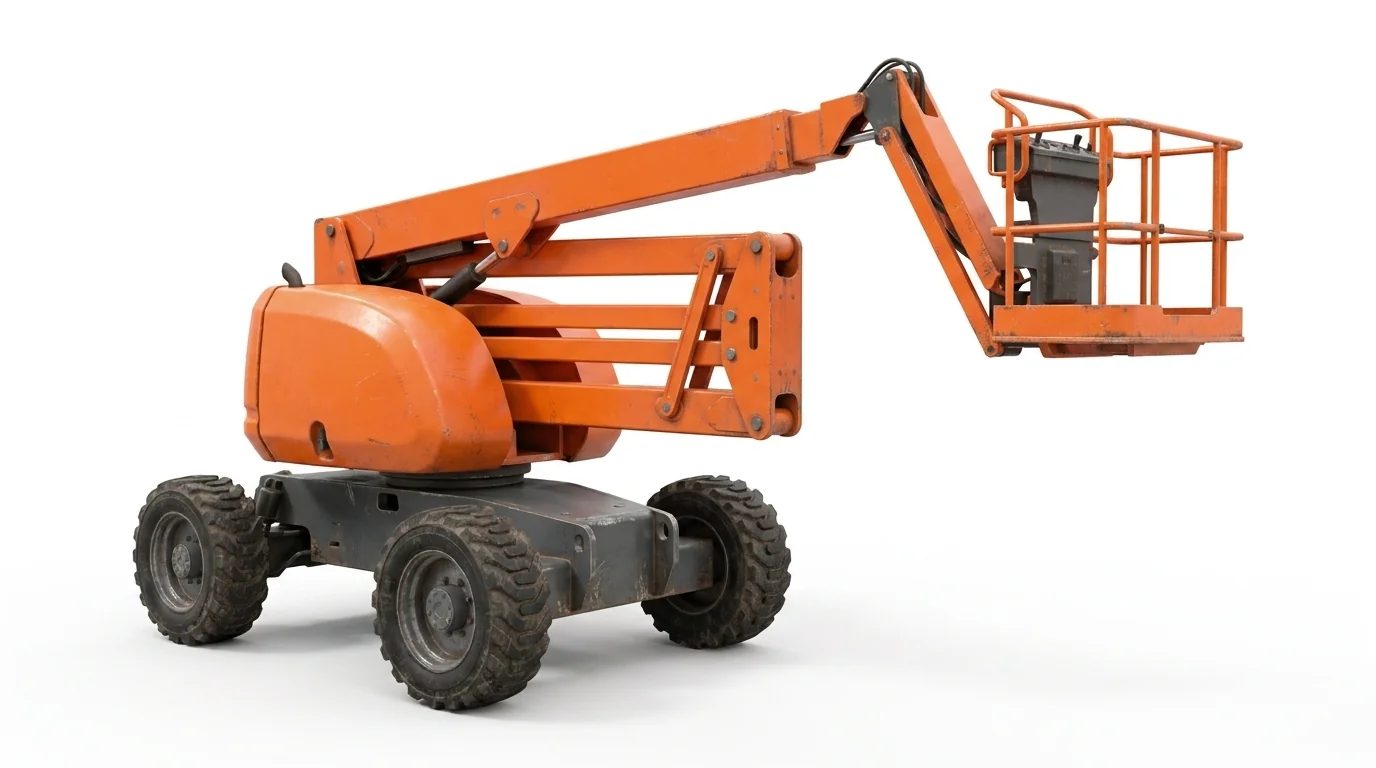
Use an articulating boom layout when the work area is blocked by parapets, conveyors, racking ends, mezzanines, or tree canopies. The decision starts with geometry:
- Can the machine sit below the task and reach up and over an obstruction?
- Is there enough horizontal reach to land the platform where hands-on work occurs, not just near it?
- Are there swing and tail-clearance limits along aisles or next to active dock lanes?
In local distribution buildings, the ability to articulate over racking and return to floor level without relocating the base saves time. On exterior projects tied to ongoing industrial expansion, joints in the boom help follow irregular façades and rooflines.
Local surface and weather factors
Chattanooga’s frequent rain and humidity mean soft shoulders and slick turf around pads, utilities, and drainage swales. Those conditions push the comparison toward:
- Electric/bi-energy units for indoor high-bay maintenance to avoid emissions and manage tight turning on polished concrete.
- 4WD diesel units with appropriate tires for uneven or damp ground at industrial sites and on sloped approaches near the valley ridges.
Stability, allowable grade, and platform capacity vary by model. Actual conditions, the selected unit’s instructions, and site procedures govern setup and movement.
Measurements that narrow the size
Bring the following to any selection call:
- Platform height and required up-and-over clearance at the highest obstruction
- Horizontal outreach to the work point, not just to the wall
- Aisle width, turning radius at pinch points, and gate or door clearances
- Floor loading limits for indoor slabs; ground firmness for outdoor work
- Power needs at the platform if tools require it
Typical Chattanooga use cases
- Indoor maintenance in high-bay logistics spaces where racks limit straight approaches
- Exterior façade work on developing industrial facilities with mixed-grade ground
- Utility runs and signage over landscaped islands near active traffic lanes
For long, unobstructed reaches to exterior façades, compare a straight boom at /telescopic-boom-lift-rental/. For slab-only aerial access without outreach, see /electric-scissor-lift-rental/.