Start with surface and slope
- Is the platform set on compacted stone, soil, or cured slab?
- Are there approach ramps, drainage swales, or curb cuts affecting entry angle?
- How does recent rainfall change firmness under tires?
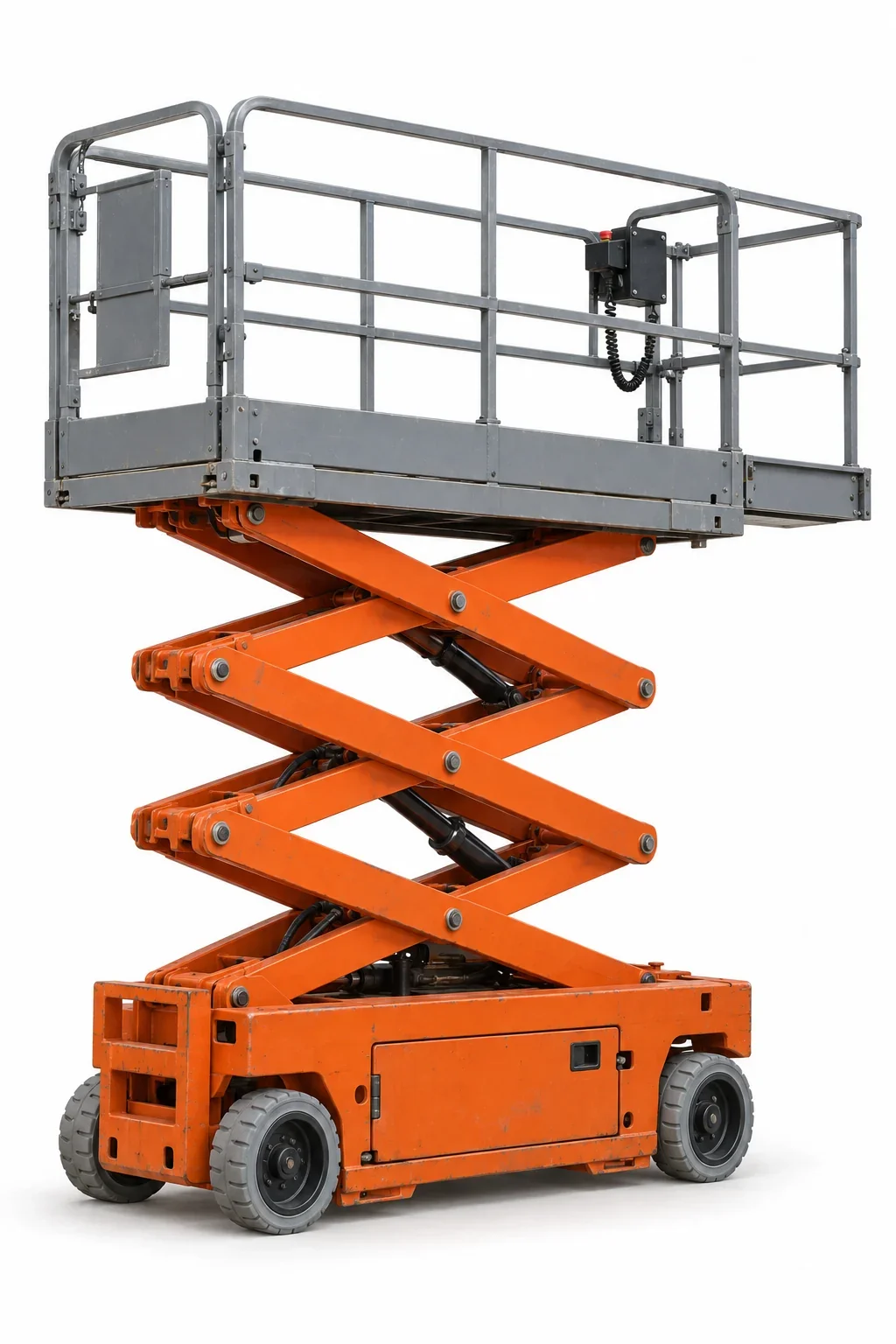
In the Tennessee River Valley, frequent precipitation can turn work pads slick or soft. Rough‑terrain scissors pair larger tires and 4WD with wide platforms for straight-up exterior work when site conditions and procedures allow.
Match reach to the façade or structure
Once traction and stability are addressed, size platform height to the fascia, panels, or utilities. For up-and-over tasks around steel, piping, or architectural features, a boom at /boom-lift-rental/ or /aerial-lift-rental/ may fit better than a scissor.
Key constraints for Chattanooga sites
- Ground support: Verify bearing capacity of subgrade or slab-on-grade sections.
- Grade transitions: Entry angles at pads and access roads can dictate needed clearance.
- Weather windows: After heavy rain, reassess surfaces before committing to heavier platforms.
- Work zone width: Rough‑terrain scissors need more footprint than slab electrics; check staging room near façades.
Nearby work areas
Industrial and commercial projects in outlying communities share similar terrain changes from flat pads to gentle slopes. The same selection logic applies: traction and ground support first, then platform height.
Actual conditions, the selected unit’s instructions, and site procedures govern elevated work.