Start with the placement task
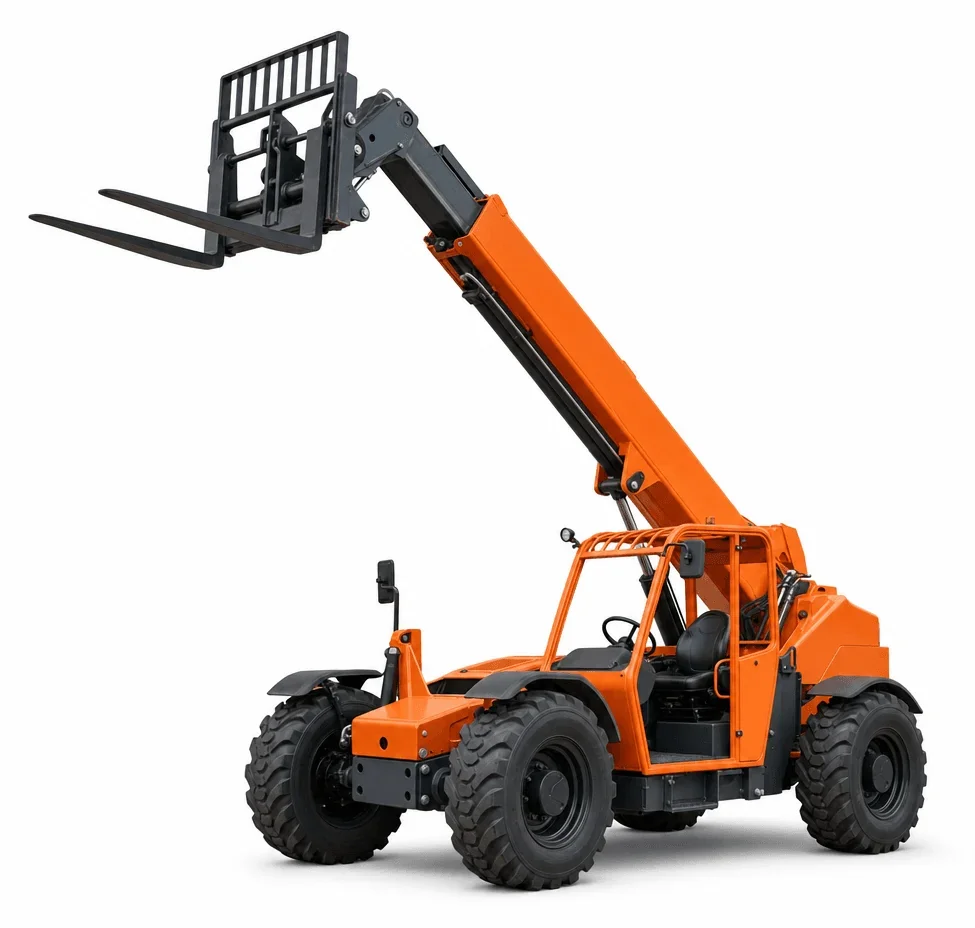
Telehandlers solve three problems: lifting palletized loads, placing them at height, and moving them across imperfect ground. Planning begins with:
- Maximum load weight and dimensions
- Placement height and horizontal setback from the landing point
- Whether the machine must pass through gates, under canopies, or along partially finished drives
Loads placed on mezzanines or roof edges at local distribution buildings often require reserve capacity at reach, not just at ground level.
Ground and weather shape the choice
Chattanooga’s precipitation and terrain create soft spots near pads and uneven approaches around active sites. These factors influence tire type, steering mode, and the need for 4WD. Confirm the travel path’s bearing capacity and any grade changes. Actual conditions, the selected unit’s instructions, and site procedures govern safe operation and staging.
Dimensions and logistics to verify
- Overall width and height for access routes and doorways
- Turning radius within laydown yards and between building corners
- Fork length and carriage type needed to land the load
- Boom reach chart at the target height and setback
- Availability of level, compacted ground at staging and landing points
Chattanooga use cases
- Material movement for distribution buildouts where cranes would block active lanes
- Roof deck and façade deliveries during industrial park expansions
- Staging mechanical units near loading areas with limited approach angles
For personnel access to the same elevation work, compare /telescopic-boom-lift-rental/ or /articulating-boom-lift-rental/. For indoor pallet moves on finished slabs, see /forklift-rental/.